Block Puzzle


What Is Block Puzzle?
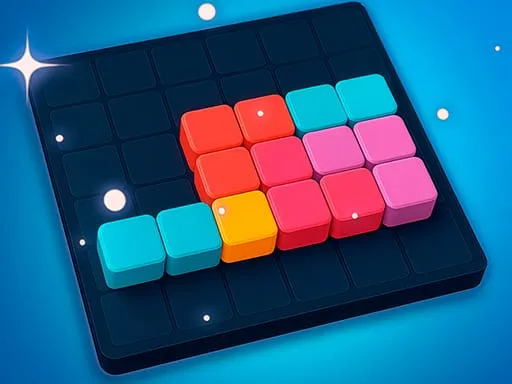
Block Puzzle is a calm but demanding grid game built around shape placement, line clearing, and long term planning. In Block Puzzle, you drag pieces onto a square board and try to complete full rows or columns so they disappear. The rule set is simple, yet the strategy grows quickly because every placement changes the future shape of the board. A move that looks safe now can create a difficult gap two turns later.
That is why this puzzle works for both beginners and experienced puzzle players. New players understand it in seconds because the goal is clear. Fit pieces, clear lines, and stay alive. Experienced players enjoy it because survival depends on pattern reading, board balance, and patience. The game feels relaxing on the surface, but it rewards careful decisions much more than random placement.
Most versions show several pieces at once and ask you to place all of them before new shapes appear. Many versions also keep each piece fixed, so rotation is not part of the challenge. This makes the game more about planning than speed. You are not reacting to falling blocks. You are protecting open space, creating clean lanes, and avoiding tiny holes that ruin future turns.
Play in Your Browser
Why browser play suits Block Puzzle
The game is an excellent puzzle for browser play because it starts fast and reads clearly on almost any screen. You can open the game on this site, wait a moment for the board to load, and begin your first round without a download. That easy access matters because the game is perfect for short sessions. One round can last only a few minutes, yet a strong run can keep you focused for much longer.
Browser play also fits the rhythm of the game. You can pause between moves, study the tray, and think without pressure. On desktop, a mouse or trackpad gives precise control when you place a shape. On mobile, touch input keeps the game direct and natural because dragging a piece feels like moving it by hand. If you want a clean place to practice, this site is the best place to play the game online.
How to Control Block Puzzle
Basic controls
The game uses very simple controls. Select a piece from the tray, drag it to an empty part of the board, and release it if the shape fits. If the piece does not fit, the game will not place it. Most players learn the controls in one round, which is one reason the game has such broad appeal.
How line clearing works
When the game fills a full row or a full column, that line clears and opens fresh space. Strong players do not chase every possible clear. Instead, they choose clears that keep the board flexible. In the game, open space is your most valuable resource. A board with smooth, connected space is much safer than a board filled with scattered empty cells.
Smart control habits for higher scores
The best control habit in the game is to look at all available pieces before you move any of them. Think about the tray as a set, not as three separate decisions. A smaller shape may prepare the perfect lane for a longer one, and a quick clear may be worse than a slower move that keeps the center open. If you want to improve in the game, slow down, scan the whole board, and place pieces with a plan.
Why Block Puzzle Rewards Planning
Board shape matters more than points
Many new players think the game is only about clearing lines as often as possible. That is not enough. The stronger approach is to protect useful board shape. Wide open lanes help large bars fit later. Clean corners give awkward shapes a home. In the game, a lower scoring move can still be the best move if it keeps the board healthy for the next tray.
It also helps to avoid isolated one cell holes. These gaps are dangerous because very few pieces can repair them. Once the game starts filling with broken patterns, your options shrink quickly. That is why experienced players keep the center open, build carefully around the edges, and treat every empty square as part of a larger structure.
Where Block Puzzle Comes From
The idea behind the genre
The game belongs to the wider family of line clearing and shape fitting games that grew from classic block design. Older arcade and console puzzle games proved that players enjoy the simple pleasure of filling lines and watching space open again. The game takes that basic idea and slows it down. Instead of reacting to pieces that fall in real time, you decide exactly where each shape should go.
That change is important because it gives the game its identity. The game feels more thoughtful than frantic, which is why it has become such a strong browser and mobile format. Modern versions of the game often focus on clean visuals, easy controls, and quick restarts, but the core appeal stays the same. Build smart patterns, clear lines, and survive longer through better decisions.
Common Questions About Block Puzzle
What is the goal of Block Puzzle?
The goal of the game is to place shapes on the board, clear full rows or columns, and keep enough open space for future pieces. The round ends when no available piece can fit.
Is Block Puzzle easy for beginners?
Yes. The game is easy to learn because the controls are simple and the objective is clear. The deeper challenge appears later when the board becomes crowded.
Can I play Block Puzzle without downloading?
Yes. You can play the game directly in your browser on this site, which makes it easy to start quickly and retry as often as you like.
Does Block Puzzle use rotation?
Many classic versions of the game do not let you rotate pieces. That fixed shape system is part of what makes planning so important.
Why do I lose even when the board has empty cells?
You can still lose the game with empty cells on the board if those spaces do not match the shapes in your tray. Empty space only helps when it is usable.
What is the best beginner tip for Block Puzzle?
The best beginner tip is to keep the center open, avoid tiny holes, and study all pieces before moving. In the game, clean space is usually more valuable than one fast clear.
Comments
Loading comments…